Rethinking Waste Collection Risk Management
Featured article as seen in Waste Today
Rethinking Waste Collection Risk Management
Adding real-time visibility can help improve waste collection risk through coaching and clearer incident reports.
Moving material efficiently is still the job, but it is no longer the hardest part for waste haulers expanding their service areas. The bigger pressure today is managing risk, which involves knowing what drivers are doing on route, having documentation that holds up when incidents occur and building a coaching process that changes behavior over time rather than reacting after the fact and hoping for the best.
That pressure is not new, but it has increased exponentially. Insurance costs have climbed steadily across the industry. Scrutiny around incidents has increased. Regulators, customers and carriers expect more accountability than they did a decade ago. Workforce challenges have made it harder to absorb the downstream costs of high turnover, repeated performance failures or disputed claims that drag on for months.
When something goes wrong on a route, operators need answers. They need to know exactly what happened, who was involved and whether it was preventable. In many cases, they also need to defend their drivers against claims that do not reflect what actually occurred.
The problem is that most collection operations were not built with that kind of visibility in mind. Driver reports capture what drivers choose to share. Customer complaints reflect only their perspective. After-the-fact reviews piece together whatever documentation exists. Those approaches are very time-consuming and leave gaps. In a high-volume, high-liability business, those gaps carry real consequences.
For some operators, that limitation has become an accepted cost of doing business. For others, it has become the reason to change how they operate entirely.
Growing challenges
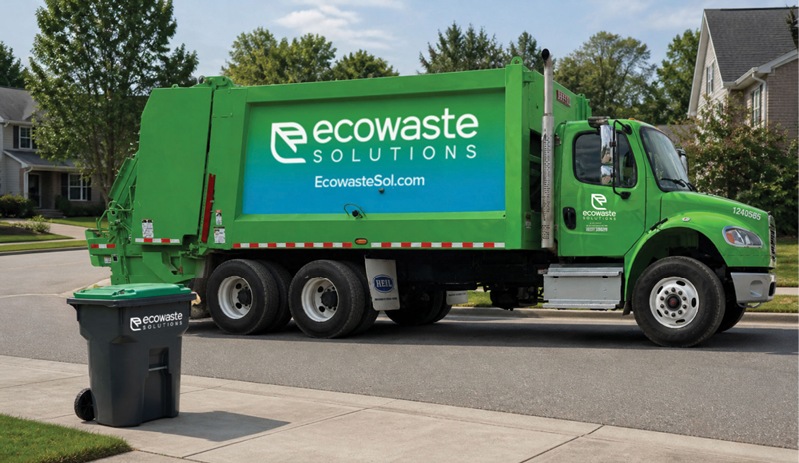
Ecowaste Solutions is a regional waste and environmental services provider headquartered in Coppell, Texas. The company operates across nine states throughout the South, including Alabama, Arkansas, Florida, Kansas, Louisiana, Missouri, Mississippi, Oklahoma and Texas. Its services span residential and commercial waste collection, roll-off, recycling, portable restrooms and a range of other environmental solutions.
As Ecowaste has expanded its footprint, the operational picture has grown more complex. More routes mean more drivers, more variability and a greater need for consistent oversight across the fleet. Company leadership recognized that the tools in place were not keeping pace with the scale of the operation.
Ecowaste needed better insight into daily driver activity. It needed clearer documentation when incidents occurred and a way to coach performance that did not depend on self-reporting or delayed feedback. Protecting drivers, customers and the business required a different approach.
Building a connected operation
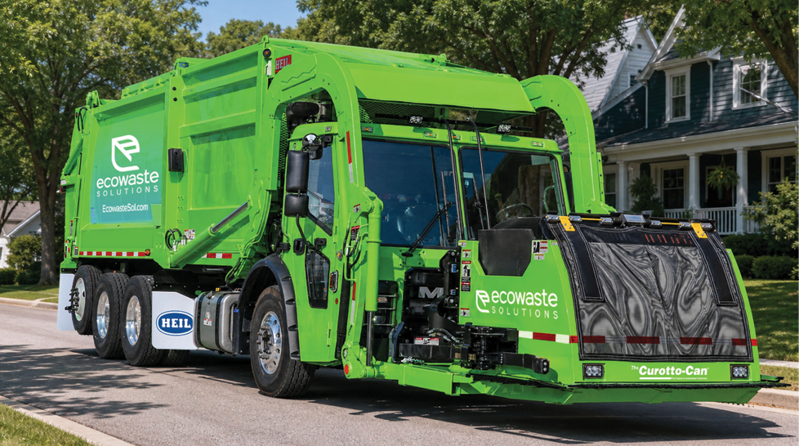
To address those needs, Ecowaste expanded its use of 3rd Eye camera and safety technology across its fleet, integrating those systems within the broader Connected Collections ecosystem alongside its Heil refuse collection equipment. The goal wasn’t simply to add cameras; it was to create a more complete operational picture built on real, objective data rather than assumptions.
Because Heil and 3rd Eye operate within the same Connected Collections fleet management ecosystem, the integration between collection equipment and safety systems is designed to work as a single environment rather than a set of disconnected tools. For Ecowaste, that connectivity proved critical. Data from the field flows seamlessly into a single unified view, giving managers the kind of on-demand, consistent and reliable information that is hard to assemble when systems operate in separate lanes.
Key capabilities include 360-degree camera coverage across the fleet, driver behavior monitoring, passive service verification data collection covering photos and service time, documented customer exceptions and postincident video documentation. Together, those tools gave managers something they had not had before: a consistent, reliable and real-time record of what is happening on routes daily.
The rollout required real effort. Getting the technology used consistently in the field took more hands-on engagement than anticipated. Training, follow-up and on-site support were all part of making the adoption stick. But once the systems were being used as intended, results followed in the places that mattered most.
Coaching that changes behavior
Driver performance was one of the first areas to improve. With consistent, objective data available across the fleet, managers could move past reactive discipline and have conversations grounded in specifics. Instead of general corrections based on limited information, they could review flagged 3rd Eye footage with drivers, point to specific events and build improvement plans around what the data showed.
That shift changed how drivers received feedback and how managers delivered it. Over time, behavior improved. Repeat issues became less common, and coaching became something drivers could engage with rather than resist.
That matters beyond performance metrics. In a competitive labor market, how a company treats its drivers influences whether those drivers stay or leave. Objective data protects equipment operators as much as it holds them accountable. When a claim is filed against a driver and the footage tells a different story, that protection is real.
Clean incident review
Incident handling changed significantly, as well. Before integrated camera systems were in place, determining what happened after an event was difficult. Accounts conflicted. Documentation was thin. Resolution took time and outcomes were often uncertain.
With clear 3rd Eye video documentation and time-stamped service data, operations teams gained a more reliable way to assess what occurred. Reviewing an incident no longer meant sorting through conflicting stories. It meant watching what happened and making a determination based on the footage.
Ecowaste has been able to more accurately determine whether incidents were preventable, confidently challenge questionable findings and resolve reviews faster. In a business where disputed claims carry significant financial consequences, that level of speed and clarity completely changes the risk profile of the entire operation.
Insurance and risk management
As safety results improved and documentation became more consistent, Ecowaste was better positioned to demonstrate active waste collection risk management to its carriers. Insurers respond to evidence. A strong safety record and documented incident reviews matter. The ability to show that the organization is actively managing driver behavior and challenging inaccurate claims with video evidence creates a more favorable picture for carriers evaluating risk.
For companies operating at scale, even modest improvements in insurance performance translate into significant savings over time.
The documentation that supports those carrier conversations is the same documentation that protects drivers and resolves disputes in the field. The value builds on itself.
Visibility runs the operation
The benefits extend beyond safety. Managers now have access to photos, service data and documented exceptions across routes daily. When a customer questions whether a service was completed, the documentation is there. When a route is running long, data helps to understand why. When an exception occurs in the field, it is captured and available for review.
That level of operational transparency changes how managers spend their time. Less of it is spent chasing information, more of it is spent acting on what the information shows. When customers want confirmation of service performance, that data can be shared directly and quickly. Transparency builds trust, and in a service business, trust is part of what keeps contracts intact.
Relationships built over time
The implementation did not happen in isolation. Ecowaste’s relationship with The Heil Co. spans more than five years. That history matters in ways that do not always show up in a product comparison. Familiarity with the equipment reduces the friction that typically slows technology adoption in the field. Support teams that understand the operation can solve problems faster, and a shared history of working through challenges together makes difficult rollouts survivable.
That foundation helped Ecowaste push through the early adoption challenges and reach the point where the technology was delivering real value in the field. Currently, Ecowaste is piloting new 3rd Eye technology with artificial intelligence (AI) and 360-degree birds-eye view camera functionality.
“We recently visited a Terex facility where they showcased both AI capabilities and the 360-camera system,” says Ecowaste CEO Dustin Reynolds. “The real-time, 360-degree bird’s-eye view provided unique situational awareness. It appeared that drivers could operate more effectively in tight spaces with greater confidence and control. If you are contemplating investing in the technology, just do it, especially if your safety needs improvement.”
Looking ahead
Ecowaste plans to continue building out its digital capabilities to help mitigate waste collection risk management with fleet electronic logging devices and routing optimization the next areas of focus. These additions point toward a fully integrated operation where Heil equipment, 3rd Eye safety systems and back-office software work together across the business rather than running in parallel.
Waste collection is becoming a more data-driven business, and the gap between operators who have embraced that shift and those who have not is starting to show in safety outcomes, insurance performance and the conversations happening with municipal customers and carriers alike.
The bigger picture
As service areas expand and accountability expectations rise, limited visibility is increasingly a liability. The ability to know what is happening on route is becoming one of the clearer dividing lines between operations that scale well and those that struggle under pressure.
Companies making that shift are not just improving safety numbers. They are building operations that hold up when things go wrong, supporting their drivers with something more than good intentions and giving customers and insurers concrete evidence of performance. They are building the kind of operational confidence that lets a growing company keep growing without losing control of what happens in the field daily. That is what the data is really for.
This article was submitted by Chattanooga, Tennessee-based Heil, a 125-year-old manufacturer of refuse collection equipment, and 3rd Eye, a provider of artificial intelligence-powered camera and technology solutions for the waste industry. Both companies are part of the Environmental Solutions family of companies and serve haulers across North America through the Connected Collections platform. Visit www.heil.com for more information.