How new camera technology is preventing dangerous fleet collisions
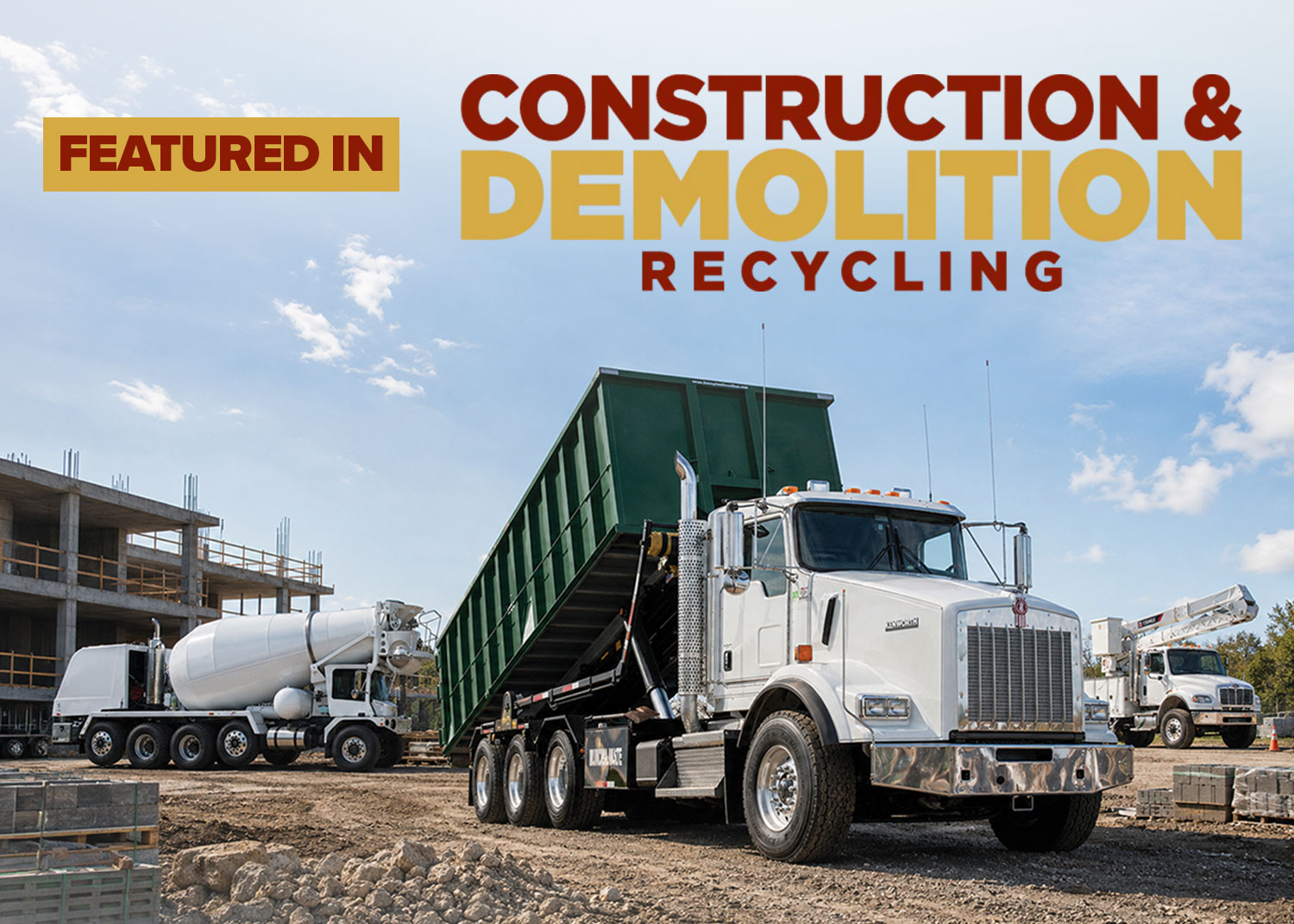
How material transportation fleets are closing the visibility gap for smarter fleet collision prevention.
Editor’s Note: This article originally appeared in the July/August 2026 print edition of Construction & Demolition Recycling under the headline “Covering all the angles.”
On a busy jobsite, safety can change in seconds. A roll-off driver backs toward a container while a skid steer works nearby. A concrete mixer enters a tight residential development where trades, delivery vehicles, pedestrians and equipment are all moving at once. A construction and demolition (C&D) hauler pulls into a site where the traffic pattern that existed yesterday has been replaced by stacked material, parked pickups and workers crossing behind the truck.
These situations are not unusual. They are part of the daily reality of construction, demolition, concrete work and material transportation. The challenge is that these environments rarely stay still long enough to feel controlled.
Drivers are expected to move large, heavy equipment through spaces that are not always designed for them. They may be entering congested sites, navigating around people focused on their own tasks or operating in areas where visibility is limited by equipment, materials, weather, lighting or the size of the vehicle itself.
In these instances, safety becomes more than a policy. It becomes a set of technology and practices that must work in real time.
Risk beyond the road
Transportation safety is often thought of in terms of highway behavior: speed, following distance, lane position, braking and driver attention. Those things only tell part of the story.
For roll-off, mixer and Construction and Demolition fleets, some of the highest risk moments happen in alleys, transfer stations, disposal sites, recycling facilities, construction entrances, demolition zones, residential developments and commercial properties where space is limited and activity is constant.
A jobsite can become congested quickly. Material deliveries may overlap. Contractors may park where trucks need to maneuver. Pedestrians or workers may assume a driver sees them when the driver does not. Equipment operators may be watching their own work area and not the truck approaching from behind.
Even an experienced driver can be put in a difficult position when visibility is limited and the surrounding environment is quickly changing.
Best practices for material transportation safety need to account for the full operating environment. Trucks enter unpredictable spaces where the driver, the vehicle, the material, the site and the people around it all interact.
Visibility is the foundation
Blind spots around the front, sides and rear of a truck can hide people, vehicles, equipment, curbs, containers, debris and fixed objects. In roll-off and mixer operations, those blind spots become even more difficult to manage because the work often requires backing, tight turning, positioning and slow movement around active jobsites.
Traditional mirrors and backup cameras help, but they do not always provide the full picture. A driver may see one angle clearly and miss another. A ground guide may help in some situations but is not available on every site. A spotter can be difficult to see or hear in noisy environments.
A bird’s-eye camera view gives the driver a more complete understanding of the vehicle’s surroundings. Instead of forcing the operator to mentally piece together different mirror views and camera angles, a 360-degree system can show the full area around the truck in a way that is easier to process. When paired with artificial intelligence (AI) object detection and real-time alerts, that added visibility can help identify potential hazards and give the driver more time to react.
Systems like the 3rd Eye AI-powered 360 Cameras are built specifically for this kind of work. The bird’s-eye view is displayed directly on an in-cab monitor with AI image recognition overlaying detection zones in real time, allowing drivers to see exactly where potential hazards are around the vehicle without taking their attention off the job. For material transportation fleets, this is especially useful in the moments when risk is highest, such as backing toward a container, entering a crowded site, pulling alongside a mixer discharge area, navigating around parked vehicles or leaving a property where pedestrians and traffic may not be predictable.
Safety best practices start with dispatch
One of the more practical opportunities for improving material transportation safety is knowing where equipment is, what it is doing and which asset is best positioned for the next job. In busy operations, dispatch decisions can have a direct effect on risk.
Sending the wrong truck into a tight or backed-up site creates unnecessary maneuvering. Sending equipment long distances adds time pressure. Dispatching without a clear understanding of asset location can create confusion, delays or overlapping arrivals at already crowded jobsites.
For C&D, roll-off and concrete operations, the sites are often packed with people, equipment, material piles, temporary fencing, dumpsters and staging areas. The less coordinated the arrival, the more difficult the environment becomes for everyone on it.
Fleet location awareness helps operations teams make better decisions before the driver is ever exposed to the site. When GPS data and vehicle location are integrated into a connected fleet platform, dispatchers can see where every asset is in real time, send the right vehicle, reduce unnecessary movement and avoid creating more congestion than the job already has.
That kind of visibility, built into the same system that manages cameras and driver behavior data, is what separates reactive operations from proactive ones. The safest maneuver is often one that does not need to happen.
Speed matters
For heavy commercial vehicles, speed impacts reaction time, stopping distance and the severity of any incident that does occur. That is true on highways and public roads, but it also matters on access roads, facility yards, transfer stations, landfill roads and jobsite approaches.
In many cases, speed becomes an unconscious habit. Drivers may be trying to stay on schedule. They may be familiar with a route and less alert to new risks that day. They may not realize a pattern has developed until the data shows it.
Speed monitoring and reporting can be a valuable part of a broader safety program. 3rd Eye’s speed reporting tools as part of their fleet safety technology solutions combine telematics, location intelligence and video to give managers a clear picture of where unsafe patterns occur and which drivers need targeted attention. The conversation changes from “slow down” to “this specific behavior is creating risk in this specific situation.”
Evidence changes the conversation
Even with strong practices in place, incidents and disputes will happen. A customer may claim property damage. A contractor may say the truck hit equipment. A driver may be accused of unsafe behavior. A near miss may be reported without enough detail to understand what occurred. After a load is delivered, someone may question whether the driver followed the correct site procedure.
Without objective information, managers may be left relying on memory, partial accounts and assumptions. The driver may not remember every detail. The customer or site contact may only have one perspective. By the time the issue is reviewed, the facts may already be blurred.
Video and event data change that. When camera footage, telematics, GPS information and safety events are automatically captured and sent to the cloud, managers can review what happened with confidence.
Evidence helps reduce guesswork. It protects drivers when they are not at fault and identifies coaching opportunities when they are. A connected system that allows events to be requested, reviewed and acted on turns documentation into an operational tool rather than a filing exercise.
Looking to the future
One mistake fleets can make is thinking that more technology means more safety, and therefore more collision prevention. Most fleets already talk about safety regularly. Effective coaching uses actual events to help drivers understand what happened, why it mattered and how to approach a similar situation differently in the future.
Technology improves safety when it fits the workflow and reduces friction for the people using it. Drivers should be able to focus on operating the vehicle safely. Managers should be able to access the information they need without searching through disconnected systems and identify trends without being buried in data.
The industry is moving toward a model where safety is supported by visibility, data and documentation built into the operation. Drivers gain a clear view of their surroundings and managers get a clear understanding of behavior and events. Dispatchers get a clearer picture of where equipment is. When something does happen, the organization has a record it can trust. The fleets that perform best will be the ones that give their drivers better visibility, give their managers better evidence and build safety into the way every trip is planned, completed, reviewed and improved.